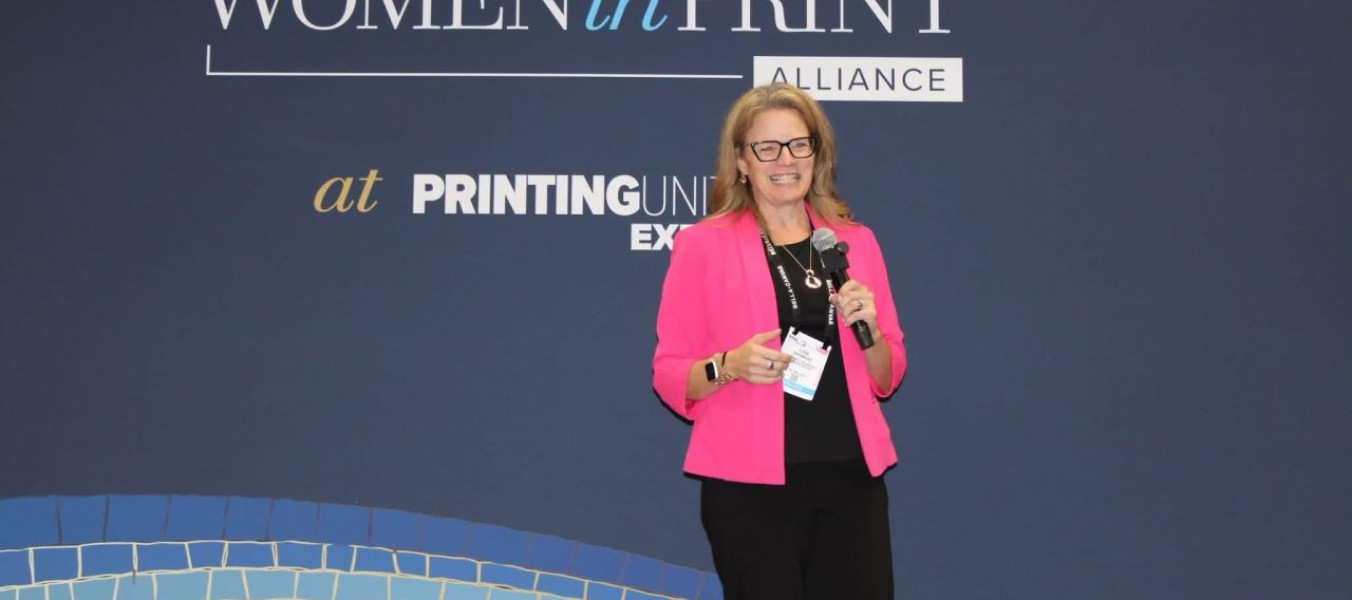
Four Questions with Lisa Shimkat
Unlocking SBA Resources and New Opportunities for Women-Owned Businesses in Print
From accessing capital to navigating challenges and finding new opportunities for growth, the U.S. Small Business Administration (SBA) offers resources that can make a difference for women in the printing industry.
We caught up with Lisa Shimkat, SBA associate administrator of Field Operations, to explore what the agency offers the Women in Print Alliance community. She also shared her key takeaways from last month’s PRINTING United Expo.
Why was it important to you to engage with women leaders in the printing industry at PRINTING United Expo?
It was a privilege to participate in the PRINTING United Expo and join the Women in Print Alliance events. I have attended this event before, and I continue to be impressed by the innovation of the printing industry.
This industry is also personally meaningful to me. My son owns a print shop in Iowa, and I have seen firsthand the dedication it takes to serve customers, manage day-to-day operations, invest in equipment, and adapt to a changing marketplace.
Women leaders are making important contributions across the printing industry, creating jobs, building businesses, and strengthening their communities. SBA is committed to ensuring entrepreneurs can access the capital, counseling, and contracting support they need to grow and succeed.
What is the biggest misperception about the SBA?
People often think the SBA lends money directly to small businesses. In most cases, it does not. The SBA guarantees a portion of loans made by participating lenders, such as banks, credit unions, and community lenders. That guarantee lowers the lender’s risk and makes it easier for small businesses to get financing they might not otherwise qualify for.
Disasters are the main exception. After a declared disaster, the SBA lends directly, offering low-interest disaster loans to help eligible businesses, homeowners, renters, and nonprofits recover and rebuild.
SBA-backed financing and disaster help are important, but they are only part of what the agency does. The SBA supports entrepreneurs at every stage, from starting a business to growing and expanding it. Through our onshoring portal, we also help businesses find the resources they need to strengthen domestic supply chains and bring manufacturing and production back to the United States.
Through SBA District Offices, resource partners, and participating lenders, small businesses can get:
• Business counseling and training
• Access to capital
• Help winning government contracts
• Other resources to support growth
The SBA also includes two offices that speak up for small businesses inside the federal government:
• Office of Advocacy: An independent voice for small businesses that represents their interests before Congress, the White House, and federal agencies, and works to make sure new regulations take their concerns into account.
• Office of the National Ombudsman: Helps small businesses resolve problems with federal agencies when they face excessive or unfair regulatory enforcement, such as repeated audits, inspections, fines, or penalties.
Our goal is to help small businesses prepare for opportunity, respond to challenges, and build a strong future.
What are the top three SBA resources women owners of small print companies should know about right now?
First, connect with a local SBA resource partner. Small Business Development Centers, Women’s Business Centers, SCORE, and Veterans Business Outreach Centers provide practical counseling, mentoring, training, and guidance on business planning, operations, marketing, and growth.
Second, explore SBA backed financing. Participating lenders can help eligible small businesses access capital for working capital, equipment, inventory, real estate, and expansion. With the Working Families Tax Cuts, a company is able to utilize 100% expensing of qualified equipment.
Third, explore government contracting. Federal agencies purchase printing, promotional items, signage, packaging, and related services. SBA can help small businesses understand the federal marketplace and determine whether programs such as the Women Owned Small Business Federal Contract Program may be relevant.
A good place to begin is sba.gov/counseling/local-assistance/, where business owners can identify local SBA support. SBA’s field offices and resource partners connect entrepreneurs with counseling, financing pathways, and federal contracting guidance in their communities.
What surprised you most about PRINTING United Expo?
The scale of PRINTING United Expo impressed me, and so did the range of innovation on display.
The Expo showed how much the printing industry gives to businesses and communities through branding, packaging, signage, promotional materials, communications, and specialized production. Printing is part of nearly every sector of our economy. It shows up in the products on store shelves, the signs that guide us, the materials that help small businesses reach new customers, and the packaging that gets goods to market. Printers are often the heroes in the background. Their work is everywhere, but people rarely stop to think about the skill, precision, artistry and dedication behind it.
The Expo also reflected the hard work behind every small print business, from customer service and workforce needs to equipment investments and plans for growth. My son runs a print shop, so I’ve seen its day-to-day realities firsthand. These decisions are very real for small business owners, and they carry real weight.
Making a branded T-shirt was a fun reminder of the creativity and technology that make this industry so dynamic. It was also a reminder that behind every finished product is a business owner and a team who help other businesses and communities succeed. SBA is here to be a partner to help your businesses find success.
Women in Print Alliance encourages members to explore these resources and discover how the SBA can support their business goals. To learn more and connect with local assistance, visit www.sba.gov.