Unlocking Talent: Key Takeaways from Our Q2 Workshop on Campus Recruitment
How Campus Recruitment Can Power the Next Generation of Print Professionals
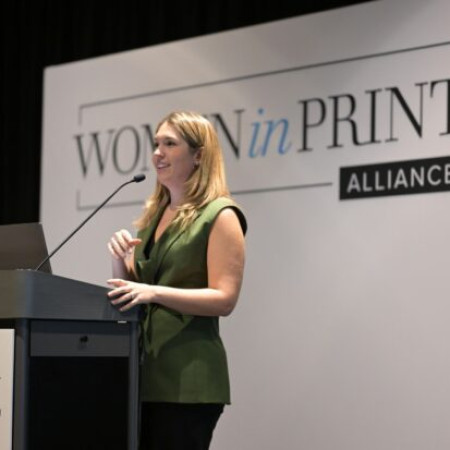
The Women in Print Alliance Q2 professional development workshop, “Leveraging Campus Recruitment to Build Your Next-Gen Workforce,” sparked a thought-provoking conversation on how companies can work with universities and local high schools to build their workforce development, while encouraging students to choose a career path in print.
The five female-led panel consisted of both university professors and young print professionals to provide different perspectives on what is most beneficial to students just starting out in the workforce post-graduation.
Dina Vees, associate professor at California Polytechnic State University and Bethany Wheeler, Graphic Communications program director and assistant professor at University of Wisconsin-Stout highlighted their programs’ strategies to expose students to employers in a more intimate and less stressful environment. They found what worked best was organizing career days or mixers, establishing an advisory committee to mentor students, and helping facilitate or requiring students to participate in internships and co-ops to acquire first-hand experience.
Lindsy Franzene, leadership development associate at Fortidia and McKenzie Munson, account manager and estimator at The Jon Roberts Company shared their invaluable internship experiences, emphasizing how this not only helped them realize all the possibilities in print, but also gave them a significant confidence boost in interviews.
Leanne Henry, recruiting manager at Millennium Print Group also stressed the importance of developing a talent pipeline to look at the best ROI for both the company and the intern. Leanne emphasized that Gen Z is some of the most diverse incoming talent and recommended embracing their fresh perspectives with open arms.
Additional Takeaways:
- Companies should consider offering housing stipends or relocation assistance for interns to provide students with more options when applying to internships.
- Businesses should consider partnerships with local colleges and high schools, including non print-specific programs.
- Companies should focus on marketing manufacturing roles by highlighting the creativity and problem-solving aspects to appeal more to next-gen talent.
- Internship programs should balance structure with autonomy to provide meaningful experiences, while imprinting positive impressions.
Thank you to all who participated in our Q2 workshop and for those who weren’t able to tune in, members can access the full webinar recording here.